
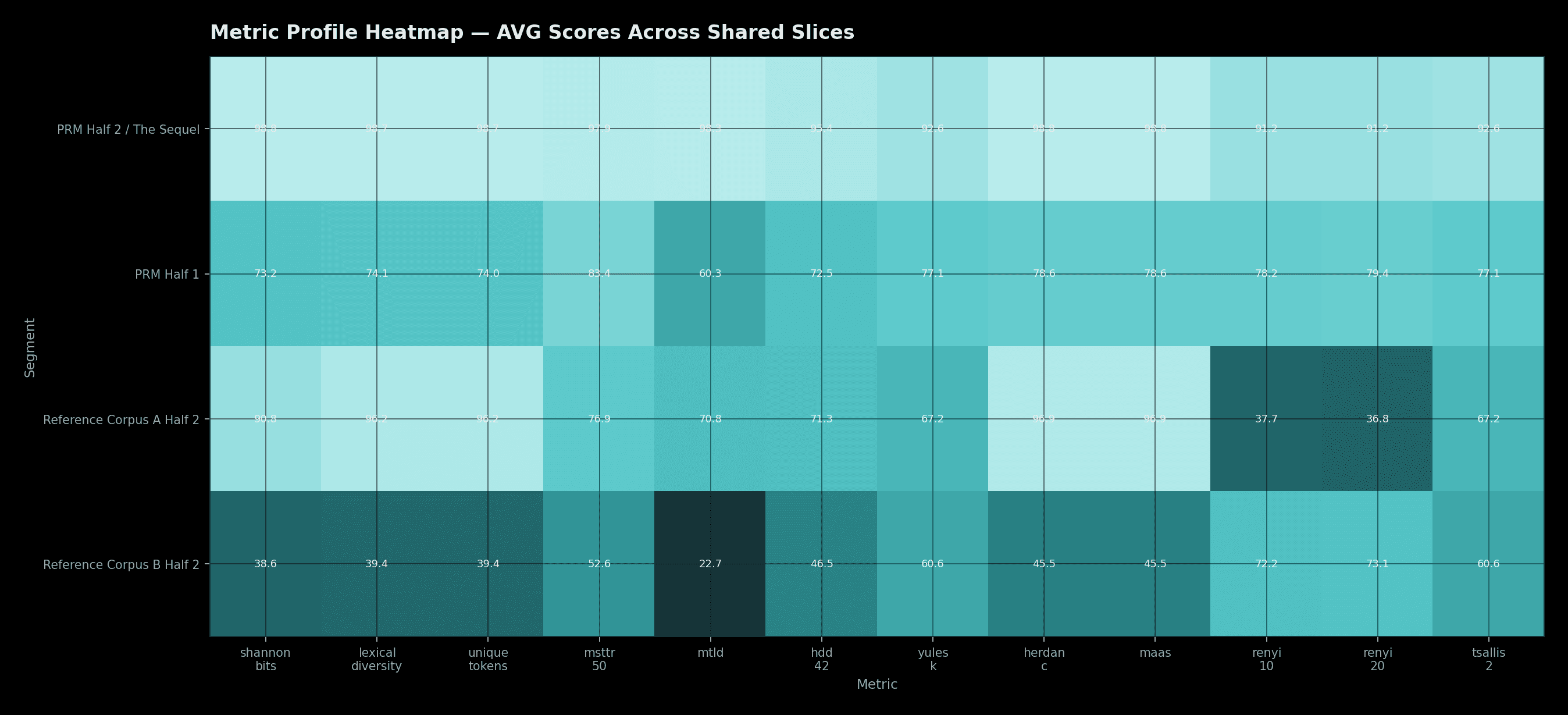
PRM combines established entropy, lexical-diversity, and repetition measures with three composite indexes that expose different dimensions of corpus behavior.
EURE
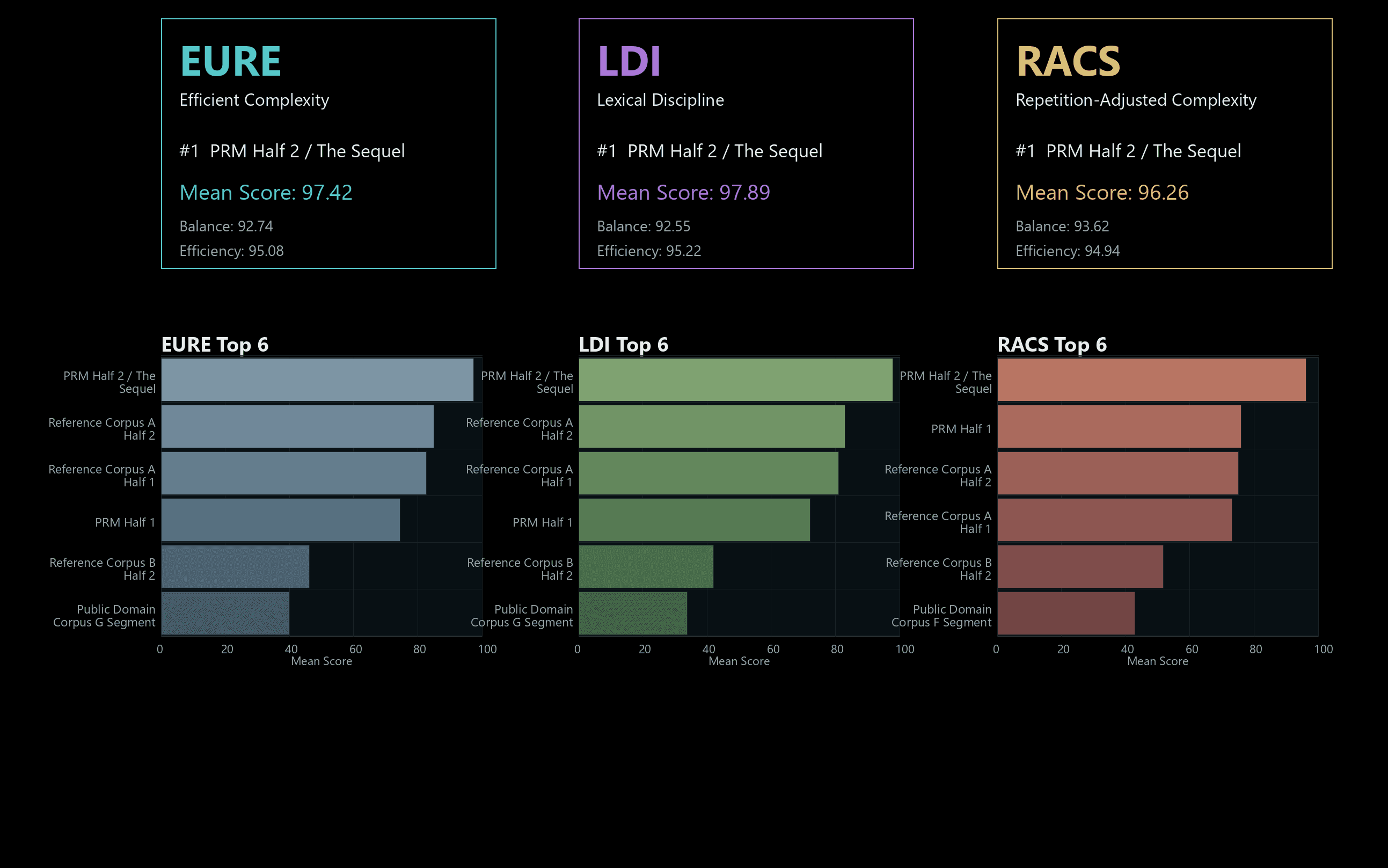
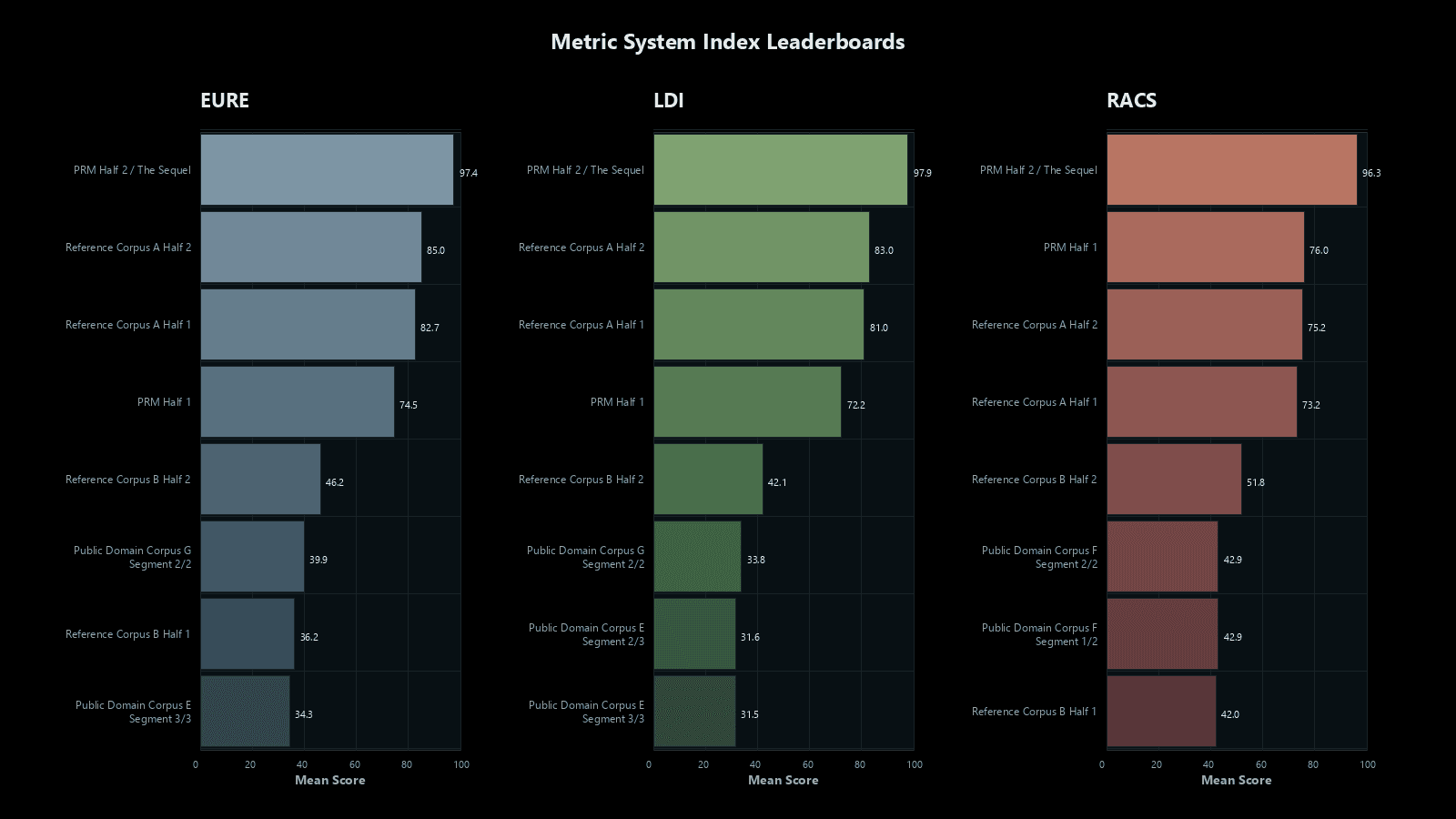
EURE combines standardized Shannon entropy, unique-token ratio, lexical diversity, and inverted Yule’s K to measure high-information lexical variation with low repetition pressure.
LDI
LDI combines lexical diversity, MTLD, inverted Yule’s K, and inverted Maas. LDI_avg reports mean standardized strength, while LDI_balance reports the geometric balance of component percentiles.
RACS
RACS combines entropy-family strength, lexical-core strength, and repetition control into a repetition-adjusted complexity score.
Reference Comparison Boundary
Reference datasets provide fixed analytical coordinates under shared preprocessing, tokenizer, slice, and metric conditions.
Public-domain references are identified by name, while protected comparator identities and source mappings remain within controlled review.